
How Wind/Hail Deductible Buyback Works in OK
October 5, 2026

A wind/hail deductible buyback policy is a separate insurance policy that can reimburse an Oklahoma homeowner for some or all of a covered wind or hail deductible after a qualifying storm. It is not an endorsement on the home policy, and it has its own premium, terms, limits, and claim process.

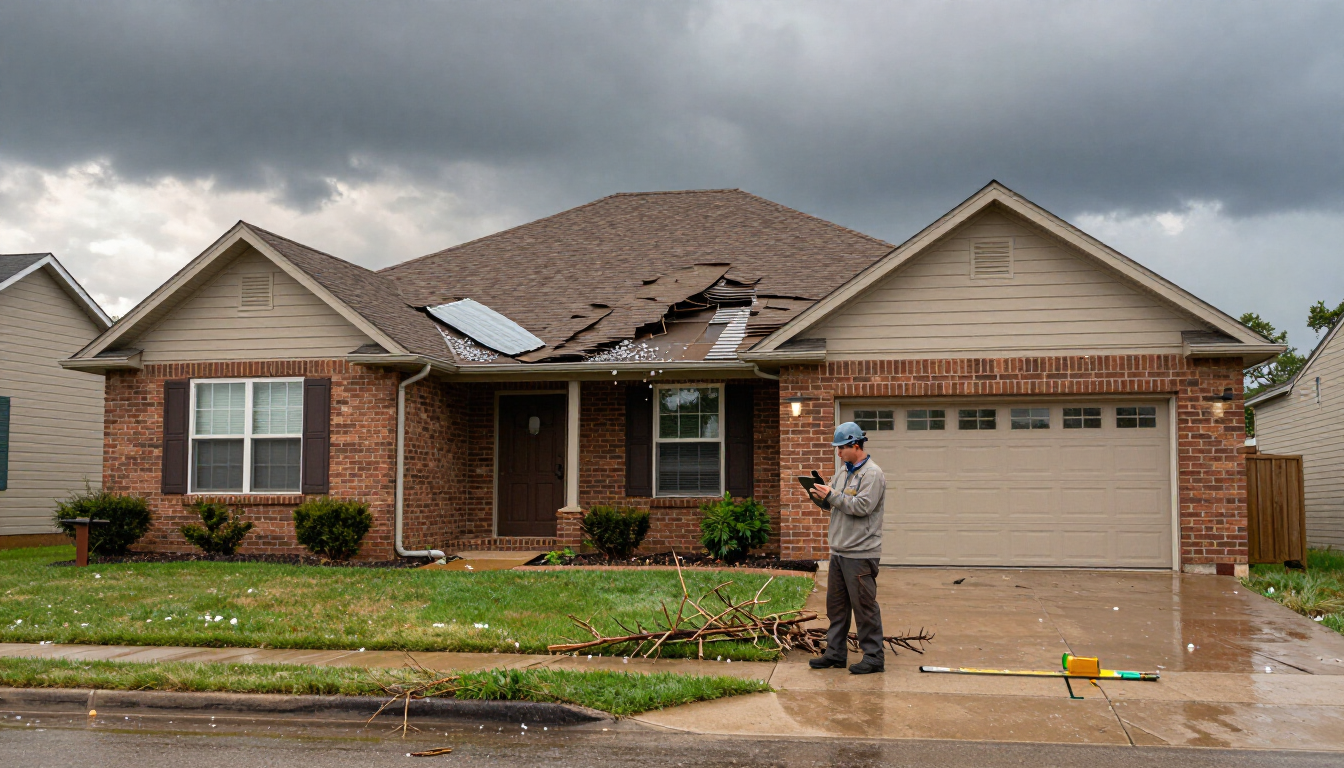
Oklahoma home with hail damage and roof inspection

Why do Oklahoma homeowners consider a wind/hail deductible buyback?

Oklahoma homeowners frequently face severe thunderstorms, straight-line winds, and hail. Those events can damage shingles, siding, gutters, windows, and other exterior property. The financial challenge is often not only the repair itself—it is the deductible required before the home insurance policy pays.

A percentage-based wind or hail deductible can be much larger than a standard flat deductible. If a home is insured for $300,000 and the policy has a 2% wind/hail deductible, the deductible may be $6,000. A standalone buyback policy is designed to help address that out-of-pocket expense when the underlying home policy responds to a covered loss.

This coverage may be worth discussing if:

  • Your home policy uses a percentage-based wind or hail deductible.
  • You want more predictable storm-loss expenses.
  • You could manage repairs but would struggle with a large deductible.
  • You understand that the buyback policy has separate eligibility rules and limits.

Homeowners should still review the underlying policy carefully. A buyback policy does not automatically make every roof loss payable.

Is a wind/hail deductible buyback an endorsement on home insurance?

No. A wind/hail deductible buyback policy is its own separate policy. It is not simply an endorsement added to the declarations page of your homeowners insurance policy.

That distinction matters because the two policies may have different:

  • Policy numbers and documents
  • Premiums and billing arrangements
  • Deductibles or retention amounts
  • Coverage limits
  • Exclusions and eligibility requirements
  • Notice and proof-of-loss procedures

The home policy generally determines whether the storm damage is covered and how the damage is adjusted. The separate buyback policy may then reimburse an eligible portion of the deductible, subject to its own terms.

Because it is separate coverage, you should keep both policy documents available and tell your agent if your home insurance changes. A new insurer, revised dwelling limit, roof update, or changed deductible could affect eligibility or the amount of available reimbursement.

What is the difference between a percentage and flat deductible?

A flat deductible is a fixed dollar amount. A percentage deductible is calculated from a policy limit, commonly the insured value of the dwelling. The exact calculation depends on the policy language and should be confirmed with the carrier.

For example:

  • A $2,500 flat deductible remains $2,500, whether the covered damage is $20,000 or $50,000.
  • A 1% deductible on a $300,000 dwelling limit equals $3,000.
  • A 2% deductible on a $300,000 dwelling limit equals $6,000.
  • A 2% deductible on a $450,000 dwelling limit equals $9,000.

Percentage deductibles can change when the dwelling limit changes. That is one reason a deductible that felt manageable when the policy began may become more significant after remodeling, inflation adjustments, or a replacement-cost update.

Do not assume the percentage applies to the purchase price of the house or the total value of your belongings. The policy may use the dwelling coverage limit, but the governing policy wording controls.

For help reviewing the broader protection on your property, compare your current coverage with a home insurance quote .

How does the separate buyback policy reimburse a deductible?

The process usually begins with a covered wind or hail loss under the home policy. You report the claim to the home insurer, cooperate with the inspection and adjustment, and pay the applicable home-policy deductible as required by the claim settlement.

If the loss qualifies under the standalone buyback policy, you then submit the requested documentation to that policy’s insurer. Depending on the policy, reimbursement may be based on the eligible deductible amount, a stated maximum, or a percentage of the underlying deductible.

A typical process looks like this:

  1. A qualifying wind or hail event damages the home.
  2. You notify the homeowners insurance carrier promptly.
  3. The home carrier determines whether the loss is covered and calculates the home-policy deductible.
  4. You complete the required repairs or claim steps under the home policy.
  5. You file a separate claim under the buyback policy.
  6. The buyback insurer reviews the loss, documentation, and applicable limit.
  7. The insurer reimburses the eligible amount, if approved.

The buyback policy generally does not replace the home insurer’s investigation. It also may not pay simply because a storm occurred. Coverage can depend on the damage being covered under the underlying policy and meeting all conditions of the separate contract.

What does a wind/hail deductible buyback cost?

The buyback policy has its own premium. That premium is separate from the premium for your homeowners insurance and may vary based on factors such as the home’s location, construction, roof characteristics, dwelling limit, deductible, selected reimbursement amount, and underwriting rules.

The lowest premium is not automatically the best option. Compare the potential reimbursement with:

  • The annual or installment premium
  • The policy’s maximum reimbursement
  • Any separate deductible or retained amount
  • Roof-related limitations
  • Waiting periods or storm-event restrictions
  • Eligibility and cancellation provisions
  • Claim documentation requirements

Think of the policy as a way to transfer part of a large, uncertain storm expense—not as a guarantee that every dollar of a home-policy deductible will be returned.

Ask whether the premium is fixed or subject to change, whether payment is required before a claim can be made, and whether coverage continues automatically at renewal. These details can materially affect the policy’s value.

Worked example: what could reimbursement look like?

Consider a hypothetical Oklahoma home with a $300,000 dwelling limit and a 2% wind/hail deductible:

  • The home-policy deductible is 2% of $300,000, or $6,000.
  • A covered hailstorm causes $25,000 in eligible roof and exterior damage.
  • The home insurer approves the claim subject to the $6,000 deductible.
  • The homeowner pays or absorbs the $6,000 required under the home policy.
  • The separate buyback policy has a $5,000 maximum reimbursement.
  • If all conditions are met, the buyback insurer could reimburse up to $5,000.
  • The homeowner may still be responsible for the remaining $1,000, plus any noncovered damage, policy exclusions, or repair costs above the approved claim.

This is only an illustration. Actual reimbursement depends on the policy language, the approved loss, roof provisions, documentation, and the selected limit. A buyback policy with a $3,000 limit would not reimburse $5,000 merely because the underlying deductible was $6,000.

What roof ACV limits should Oklahoma homeowners understand?

Some policies treat older roofs differently from newer roofs. Instead of paying replacement cost for all eligible roof damage, a policy may apply actual cash value, commonly called ACV, to a roof or roof surface.

ACV generally reflects the roof’s replacement cost minus depreciation for age and condition. As a result, the home insurer’s payment for an older roof may be lower than the cost of installing a new roof. The deductible is then applied according to the underlying policy.

A deductible buyback policy may also contain roof ACV limits or restrictions. For example, it may limit reimbursement when the underlying roof settlement is based on ACV, impose an age limit, or exclude certain roof materials or conditions.

Before buying, ask specifically:

  • Is the roof eligible for replacement-cost or ACV treatment?
  • Does the buyback policy reimburse a deductible when the roof is adjusted at ACV?
  • Is there a roof-age limit?
  • Are cosmetic damage, matching issues, or maintenance excluded?
  • Does the policy cover detached structures, siding, gutters, and other exterior items?
Insurance professional reviewing roof coverage with Oklahoma homeowner

What should you check before purchasing this coverage?

Read the buyback policy alongside your home policy. The most useful comparison is not just the premium; it is the relationship between the possible storm expense and the amount the separate policy may actually reimburse.

Use this checklist:

  • Confirm the wind/hail deductible calculation and dwelling limit.
  • Verify the buyback policy’s maximum reimbursement.
  • Ask whether it covers the full deductible or only a stated portion.
  • Review roof age, ACV, materials, and condition restrictions.
  • Identify exclusions, waiting periods, and storm-event requirements.
  • Confirm how and when a separate claim must be reported.
  • Keep receipts, estimates, photographs, inspection reports, and settlement documents.

It is also important to disclose relevant facts accurately. An undisclosed roof condition or recent loss can create coverage problems under either policy. If you are unsure how your current policies coordinate, schedule a policy review or book an appointment to discuss the details.

Is a deductible buyback right for every Oklahoma homeowner?

No. The coverage may be more useful for a homeowner with a high percentage deductible and limited cash reserves than for someone with a modest flat deductible and substantial emergency savings. It may also be unsuitable if the roof is too old, the home does not meet underwriting requirements, or the available reimbursement is too small compared with the premium.

Consider the policy when the potential deductible would create a serious financial disruption and the policy’s terms provide meaningful reimbursement. Compare alternatives as well, such as selecting a different home-policy deductible if available, improving emergency savings, or reviewing roof and exterior coverage.

The right decision depends on your home, budget, roof condition, carrier terms, and tolerance for storm-loss risk. There is no universal deductible amount or buyback limit that fits every Oklahoma property.

Frequently asked questions

What is a wind and hail deductible buyback policy in Oklahoma?

It is a standalone policy that may reimburse an eligible portion of the wind or hail deductible charged by your homeowners insurer after a covered storm loss. It has its own premium, limits, exclusions, and claim requirements, and it is not an endorsement on the home policy.

How does a 2% wind and hail deductible work?

A 2% wind and hail deductible is commonly calculated from the home policy’s dwelling coverage limit. If the dwelling limit is $300,000, 2% equals $6,000. The exact calculation is controlled by the policy wording, so confirm the basis with your insurance carrier.

Does deductible buyback cover the entire homeowners insurance deductible?

Not necessarily. The separate policy may reimburse the full deductible, a percentage, or an amount up to a stated maximum. It may also exclude certain losses or reduce reimbursement because of roof ACV provisions and other restrictions.

Does a deductible buyback policy cover an old roof?

It depends on the policy’s underwriting rules and roof provisions. Older roofs may be adjusted at actual cash value, and the buyback policy may impose roof-age, condition, material, or ACV limits. Ask for the roof requirements in writing before purchasing.

Is a wind and hail deductible buyback worth it for an Oklahoma home?

It may be worth considering when a percentage-based deductible would be difficult to pay and the potential reimbursement is meaningful after comparing the premium and restrictions. Review the home policy, roof terms, reimbursement limit, and your emergency savings before deciding.

Key takeaway

A wind/hail deductible buyback can help an Oklahoma homeowner manage the financial impact of a large percentage-based storm deductible, but it is separate coverage—not an automatic feature of home insurance. Compare its premium, reimbursement limit, roof ACV rules, exclusions, and claim process with your existing policy. Next, confirm how your deductible is calculated, ask whether your roof qualifies, and request a policy review before a storm occurs.

Home insurance myths for Oklahoma homeowners
October 3, 2026
Home insurance myths can leave Oklahoma homeowners underinsured. Learn what coverage really protects against, from replacement cost to flood, wind, liability, and credit.
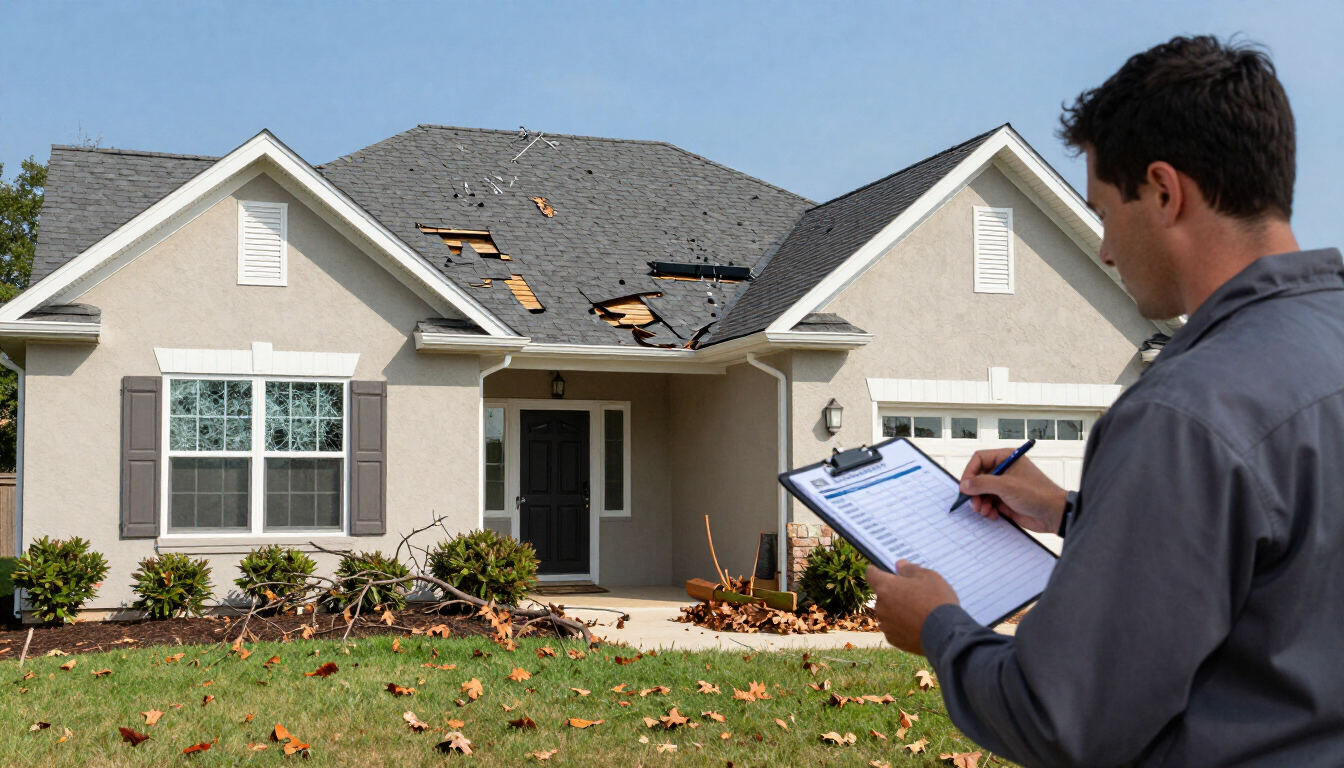
Oklahoma home insurance non-renewal and roof inspection
September 29, 2026
Learn why Oklahoma insurers non-renew homeowners policies, including roof age, hail claims and catastrophe limits, plus what to do after a non-renewal notice.
Oklahoma home insurance premiums affected by storm risk and rising rebuild costs
September 24, 2026
Why do Oklahoma home insurance premiums rise with zero claims? Learn how rate filings, storms, reinsurance, roofs, credit, and rebuild costs affect your rate.

Independent insurance agent comparing coverage options with Oklahoma shoppers
September 22, 2026
Compare an independent insurance agent vs. a captive agent in Oklahoma, including carrier access, pricing flexibility, switching options, and what to ask before choosing.
Independent insurance agent comparing Oklahoma home insurance options with a homeowner
September 17, 2026
Compare an independent insurance agent with a direct carrier for Oklahoma home insurance, including carrier choice, storm risks, claims support, and coverage questions.
Commercial insurance for Oklahoma landlords reviewing property coverage
September 17, 2026
Learn when Oklahoma landlords need commercial insurance instead of personal coverage, including unit count, ownership, tenants, and entity structure.
Modern multi-family residential building in Oklahoma at sunset representing commercial real estate.
September 8, 2026
Learn exactly when Oklahoma landlords need to switch from personal to commercial insurance. Covers unit counts, LLC ownership, and portfolio growth strategies.
Modern rental homes in Oklahoma representing property investment portfolio protection.
September 4, 2026
Discover why umbrella insurance is essential for Oklahoma landlords and real estate investors. Learn how to protect your rental portfolio from liability risks and lawsuits.
A beautiful modern home in Edmond Oklahoma representing a short-term rental property.
September 1, 2026
Ensure your Oklahoma rental is protected. Discover why Airbnb and VRBO owners need specialized short-term rental insurance to cover liability and storms.
General liability insurance for landlords in Oklahoma documents and keys
August 25, 2026
Comprehensive guide to general liability insurance for landlords with multiple Oklahoma rental properties. Protect your portfolio from injury claims today.
Show More